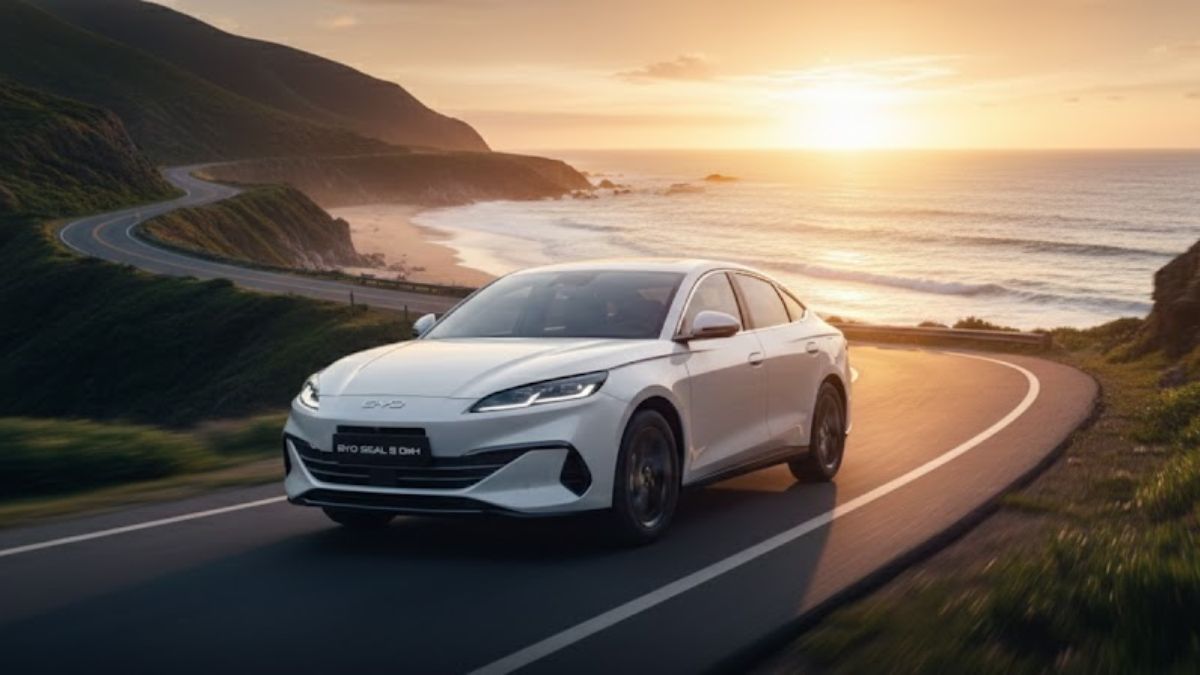

BYD: The global electric vehicle story took a dramatic turn in 2025. For the first time ever, China’s BYD moved ahead of Tesla in full-year electric vehicle sales, reshaping the balance of power in the EV world. What once seemed unthinkable has now become reality—Tesla is no longer the undisputed global leader in electric cars.

This moment is more than just a numbers game. It reflects changing consumer preferences, rising competition, and the growing strength of China’s EV ecosystem.
A Year That Changed EV Leadership Forever
According to industry reports, Tesla delivered around 1.63 million vehicles in 2025, marking an 8.6% decline compared to the previous year. Even production slipped, falling to about 1.73 million units, a rare setback for a company that had dominated global EV rankings for years.
In contrast, BYD recorded strong growth, delivering 4.6 million vehicles overall in 2025. Out of this total, pure electric vehicle sales reached approximately 2.25 million units, representing a sharp 28% increase year-on-year. This surge allowed BYD to officially surpass Tesla and claim the title of the world’s largest EV seller.

Tesla’s Toughest Year Yet
For Tesla, 2025 proved challenging on several fronts. The company reported lower-than-expected sales in the final quarter, delivering just over 418,000 vehicles, below market expectations. This slowdown pushed Tesla’s full-year total to around 1.64 million EVs, confirming the shift in global leadership.
Several factors weighed on Tesla’s performance. The end of the $7,500 U.S. EV tax credit in late 2025 cooled demand, especially among price-sensitive buyers. At the same time, growing competition from Chinese, European, and Asian automakers made the EV space more crowded than ever.
Adding to the pressure, Tesla faced reputational challenges in key markets, where public sentiment was affected by CEO Elon Musk’s political positions. Together, these elements created a perfect storm that slowed the company’s once unstoppable momentum.
BYD’s Rise Powered by Scale, Technology, and Strategy
BYD’s success did not happen overnight. The company has spent years investing heavily in research and development, battery technology, and manufacturing efficiency. Its strength lies in a fully integrated supply chain, allowing it to control costs, scale production quickly, and innovate faster than many rivals.

Industry experts point out that Chinese EV makers benefit from a strong domestic market, supportive government policies, and well-developed charging infrastructure. These advantages help companies like BYD bring advanced electric vehicles to market at competitive prices—without compromising on features or quality.
Interestingly, even Tesla has relied on its China-based giga-factory to meet global delivery targets, highlighting the importance of China in today’s EV landscape.
The Global EV Market Is Entering a New Phase
The shift from Tesla to BYD signals a broader transformation in the electric vehicle industry. EV demand is still growing, but the market is becoming more balanced and competitive. No single brand can dominate forever.
With companies like BYD, Hyundai, and European automakers pushing forward aggressively, innovation is accelerating, prices are becoming more competitive, and consumers are gaining more choices than ever before.
For buyers, this competition is good news. For automakers, it means the race has only just begun.
What This Means for the Future of Electric Vehicles
BYD’s rise shows that scale, affordability, and technological depth matter just as much as brand image. Tesla remains a major force and a pioneer in the EV revolution, but the industry is clearly moving toward a more diversified and competitive future.
As electric vehicles continue to replace traditional fuel-powered cars, leadership may shift again—but one thing is certain: the EV revolution is now truly global.
Disclaimer
This article is based on publicly reported industry data, company disclosures, and market analysis available at the time of writing. Sales figures and market positions may change as companies release updated results. This content is for informational purposes only and does not represent financial or investment advice.